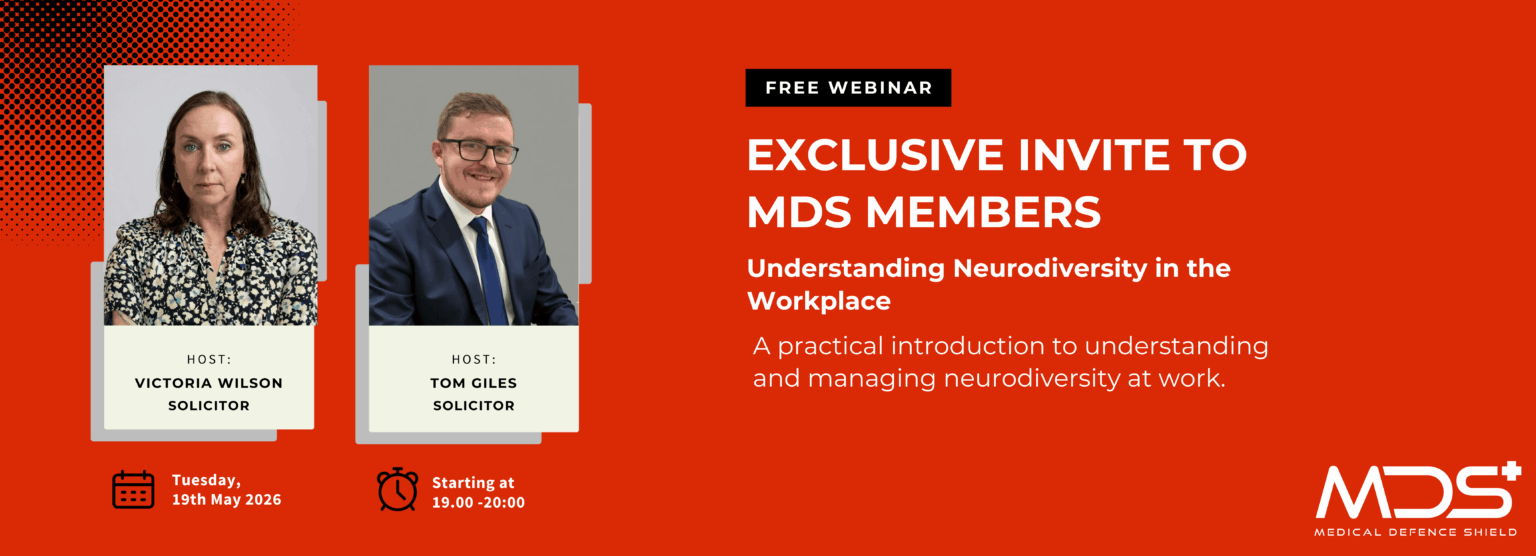
Building a neuro-inclusive workplace is both a legal obligation and a strategic advantage. This webinar brought together legal and policy perspectives to help employers understand what is required of them, and why getting it right matters for everyone in the organisation.
Under the Equality Act 2010, employers have a legal duty to implement reasonable adjustments whenever they know, or could reasonably be expected to know, of an employee’s disability, or when a request for support is made. Importantly, this duty does not require a formal diagnosis: employees must be able to seek help without being compelled to disclose. Organisations should establish clear policies, train managers in neurodiversity awareness, and foster a culture where people feel genuinely safe to be open.
Reasonable adjustments fall into three broad categories: changes to policies, procedures, or working practices; physical modifications to the workplace such as adjusted lighting or furniture; and the provision of auxiliary aids or services such as assistive technology or workplace mentors. The Advisory, Conciliation and Arbitration Service (ACAS) defines these as changes that remove or reduce disadvantages linked to a disability. Whether an adjustment is deemed reasonable depends on its practicality, cost, and its ability to remove the disadvantage without fundamentally altering the nature of the role.
In practice, adjustments can include flexible or hybrid working hours for employees sensitive to noise or sensory overload, quiet working spaces, noise-cancelling headphones, dictaphones, or software to assist with tasks such as correcting typographical errors. Providing these universally, rather than only on request, supports the entire workforce and reduces stigma. Recruitment should also be made accessible: offer electronic application options, provide clear role information, and share interview questions in advance where possible.
A range of external support is available. The government’s Access to Work scheme can provide funding and practical guidance, while occupational health services help identify appropriate adjustments. The Disability Confident Employer Scheme, run by the Department for Work and Pensions, offers structured guidance and is associated with improved staff retention, reduced sickness absence, and better morale. The Equality and Human Rights Commission provides further guidance on workplace equality and the Public Sector Equality Duty, in force since April 2011, which requires public bodies such as the NHS, police, and local authorities to eliminate discrimination, advance equal opportunities, and publish equality objectives.
The case for action is compelling. Neuro-inclusive environments improve overall staff wellbeing, trust, and retention while reducing the risk of complaints and legal grievances. Yet the employment gap between disabled and non-disabled people remains stark, in the second quarter of 2025, the employment rate for disabled people stood at 52.8%, compared to 82.5% for non-disabled people. The Women and Equalities Committee has launched a new inquiry into disability and flexible working to help close this divide across sectors.
As the webinar concluded: neurodiversity should be celebrated. A thriving workplace is one that draws on a full variety of personalities and talents. Significant progress has been made, but there is still much work to be done to ensure the voices of neurodivergent employees are properly heard.